
In my full-DIY-synth I got a module I used a lot. It’s called Yesnomaybe and all the info on that original Module from YMNK. I wanted something similar but maybe a bit more versatile in my Eurorack so I decided to do a revamp. My version is called the Serendipity and it’s got two gate Inputs and a internal clock and each lane gets two different probabilies to output gates. Also you can use the ‘lost’ gates for counter rhythms and so on.
I worked for about three months on that one and even got Alexis on board for the software development which isn’t completed yet because a second mode is planned and this is how the mode switch fits in but more on that when it works as expected. I found a kind sponsor to realise the project namely PCBWAY. With their generosity I had those beautiful glossy black PCBs in my hands within 5 days which was baffling to me.
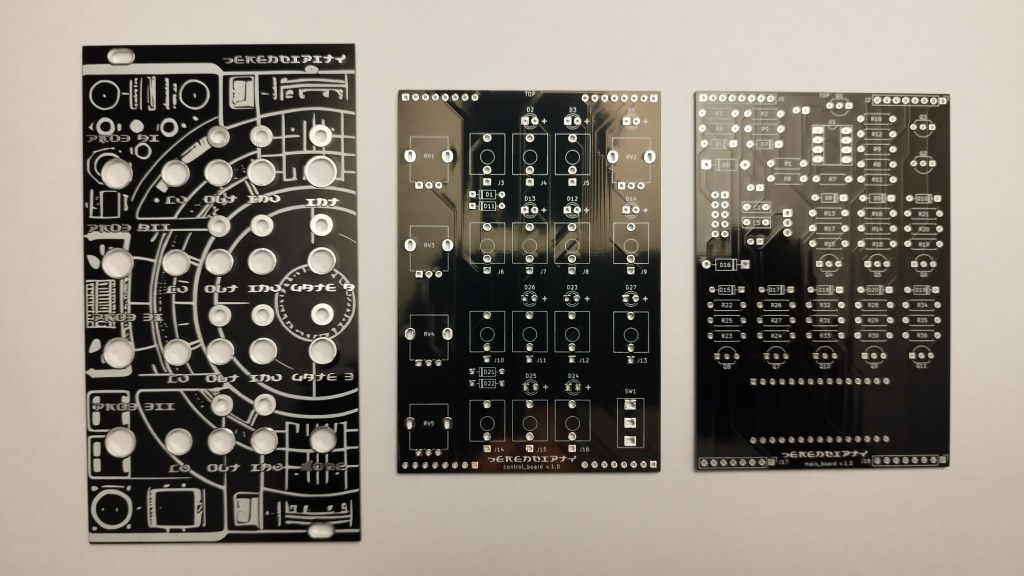
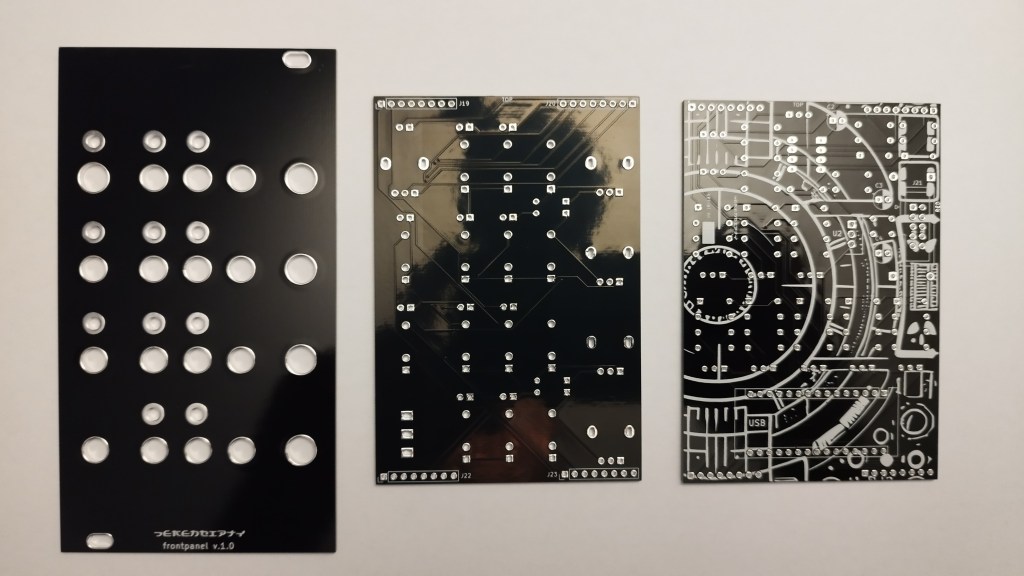
Serendipity
a probability gate module
Features:
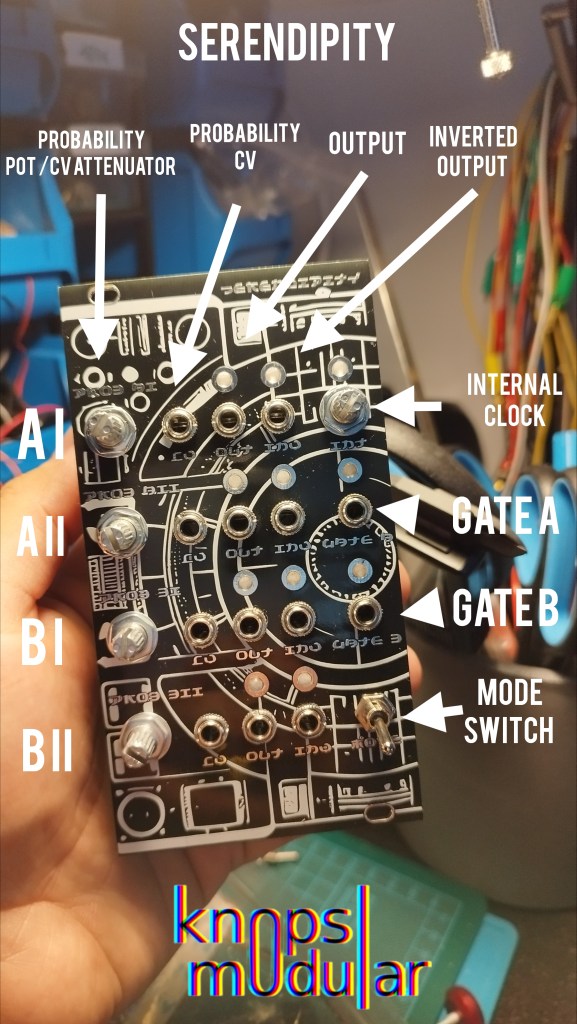
* internal clock – frequency is controlled by potentiometer and the clock output is normalled to the two gate inputs A and B
– so if you don’t input external gates as source you can use the internal clock instead for creating outputs
* gate A and gate B inputs – each of those got two probability lanes so gate A input can be handled in with two different probability values
* 4 probability lanes namely PROB A I, PROB A II, PROB B I, PROB B II – each lane is compromised of:
– potentiometer to set the probability value
– CV input to set the probability value via CV in which case the potentiometer is used as CV attenuator (full right is open!)
– gate output
– inverted gate output – when the gate isn’t output through gate out it goes through here. don’t confuse with a NOT gate
* Mode switch – currently no use but a firmware update is in progress to have a second mode
Usecases
you bascially input a gate signal and can change the probability in which it gets relayed to the output. So either it comes through or not and you can set that probability to 0% or 100% or anything inbetween using a knob or CV (- CV range is slightly less like 0%-80%)
ANY gate signal is fair game it doesn’t matter how long
Drumrythms A – to have left out hits on some parts of the drum rythm, makes them sound more organic
Drumrythms B – to alternate drums on the same gate/trigger input
Bitcrush Audio – input Audio into gate inputs to bitcrush audio. sounds awesome IMO

 knopsl modular